Native American Burial & Archaeological Sites: Watts Juniata–Susquehanna Confluence

Watts Township is being asked to swallow a massive hyperscale industrial project at one of the most historically sensitive river junctions in Pennsylvania. This is for every resident who cares about heritage, law, and basic decency.
Here at the Juniata–Susquehanna confluence, we have a well-documented and rich Native American cultural landscape with burial mounds, village sites, trails, camps, and artifact finds stretching across Duncan’s Island, Clemson Island, New Buffalo, and the surrounding river corridor within Watts Township.
We have real archaeological records, real ancestral remains, and real history that deserves respect.
As many of us are already aware, Duncan’s Island has long been recognized as a major Native American crossroads. By 1745, it was the site of a significant village known as Quenashawake or Choiniata, as well as a strategic river fording place and home to Susquehannock, Lenape, Shawnee, Tuscarora, Iroquoian and more over the years.
Historical accounts describe it as a favored home of Native people and note Indian remains there. Clemson Island, across from Watts Township on the Susquehanna, is also a documented prehistoric site with Native occupation and burial history. Factor in the finds around New Buffalo and the broader Juniata and Susquehanna corridor all within or next to Watts Township, it's easy to see that this is very significant ancestral land, not a disposable industrial pad.
If this project is allowed to move forward without full review, it could result in irreversible destruction. We've already had a burial mound desecrated for construction of the dam back in canal days. Once a burial site is ripped apart, once a village site is scraped away, once a scatter of artifacts is buried under concrete and transformers and utility trenches, it is gone forever.
No press release, no mitigation plan, and no after-the-fact apology can undo that damage.
The Pennsylvania Constitution’s Environmental Rights Amendment says the people have the right to the preservation of the state’s historic and esthetic values. Local officials are not supposed to roll over for developers and hope nobody notices. They are supposed to protect what is sacred, what is historic, and what cannot be replaced.
We should be demanding:
A full archaeological records search.
A Phase I survey of the entire project footprint and every related disturbance area.
Avoidance and protection of all burial sites and significant archaeological resources.
Full public release of reports, correspondence, and findings before any approval.
Real consultation with PHMC/SHPO before any ground is broken.
We can all say no to desecration, and no to bulldozing Native American history for profit and resource extraction. No to pretending that a sacred river landscape is just another industrial parcel. If this project is allowed to move forward without full protection, the people making that decision will be responsible for a permanent loss that can never be repaired or recovered.
We must have respect for the dead and for the history of this place.
#archaeology #nativeamerican #nativeamericanhistory #PASHARE #history#susquehannock #duncannon #perrycountypa #appalachiantrail
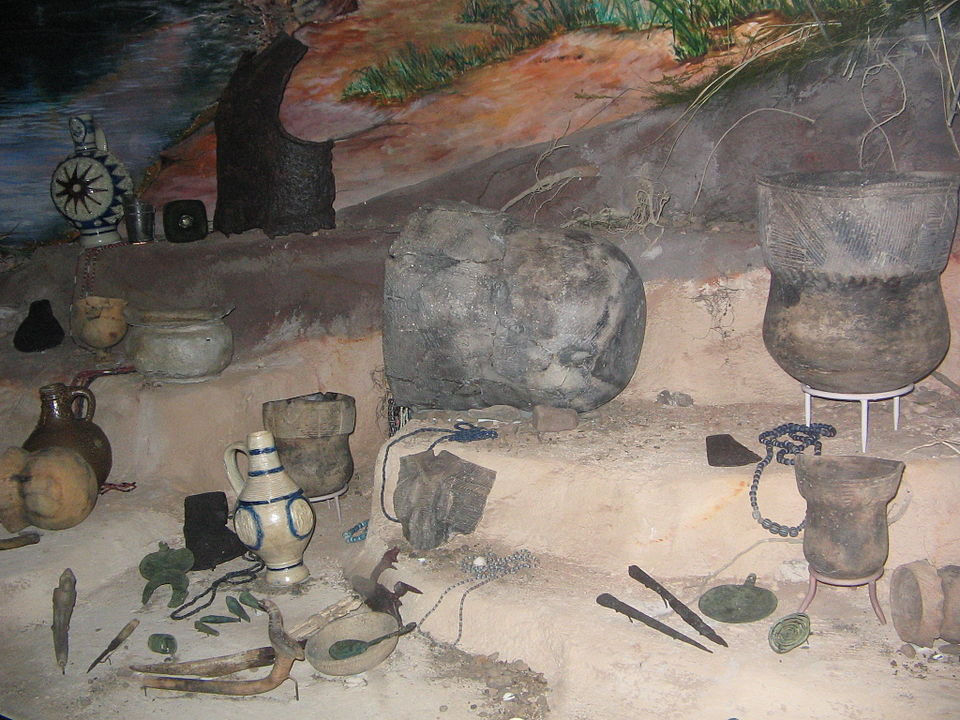
* Featured image: Display of artifacts from the Susquehannocks, in the State Museum of Pennsylvania, Harrisburg, Pennsylvania, United States
US Census, Ruhrfisch